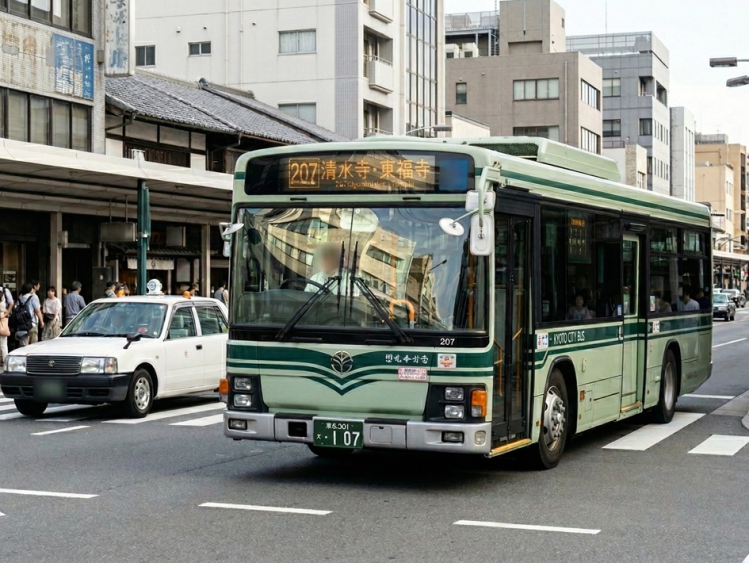
Japan is famous for its punctual and efficient public transport system. Whether you are catching a local bus in Kyoto or a Shinkansen to Tokyo, understanding the basics will make your journey much smoother.
A significant change is coming to Japanese railway stations. Major operators in the Greater Tokyo area, including JR East, Tokyu, and Keio, plan to phase out magnetic stripe tickets starting from the end of the 2026 financial year. These will be replaced by tickets featuring a printed QR code. Instead of inserting your ticket into a slot at the gate, you will simply touch the QR code against a scanner. This is much like using a digital boarding pass at an airport. Similar transitions are planned for the Kansai region. JR West is aiming for a gradual rollout from 2028.
Most railway and subway stations use automated gates. If you have an IC card or one of the new QR tickets, you just touch it against the designated illuminated reader to pass through. If you are still using a traditional magnetic ticket, you must insert it into the slot and remember to retrieve it on the other side. While IC cards are the standard, an increasing number of stations are now installing readers that allow you to pay directly at the gate using a credit card with Touch Payment capability. This is especially true at major hubs and certain lines in the Tokyo metropolitan area. However, this is not yet a nationwide standard, so it is wise to have an alternative ready.
In Japan, most buses have separate doors for boarding and exiting to manage the flow of passengers and fare collection. Depending on the city and the bus company, you might be required to enter through the rear door and exit through the front, or vice versa. In some rural areas or on smaller buses, there may only be one door used for both. Since these rules can be difficult to find or understand before you arrive, we recommend searching online for the specific city's bus rules in advance or asking for assistance at a station's tourist information centre. Regarding payment, most buses accept rechargeable IC cards and cash, and some now support credit card touch payments.
While QR codes and credit card payments are becoming more common, a physical IC card remains the most reliable option for international travellers. You can obtain a tourist-specific Welcome Suica at major entry points such as Narita and Haneda airports. Please note that standard anonymous Suica cards are currently not available for new issue. Instead, you can purchase personalised Suica or PASMO cards at major railway stations. These require the registration of your personal details and a small deposit, but they remain valid for ten years from their last use.
However, it is important to note that these cards are not universal. While major cards like Suica and Pasmo are compatible across most major cities, they may not work on some local lines or in remote rural areas that only accept their own regional cards or cash. Furthermore, you generally cannot use an IC card to travel between different regions. For example, you cannot travel from Tokyo to Osaka on a local line using only a Suica.
This limitation also applies to using IC cards for shopping. While many convenience stores and major retailers accept them, availability varies by shop and region. For a stress-free trip, it is wise to carry some physical cash as a backup.
Navigating a new country is much easier when you can communicate with the locals. If you want to feel confident asking for directions or navigating these new ticketing systems, SuikaTalk offers specialised lessons focused on travel conversation. Our Tutors can help you practise the exact phrases you will need for your upcoming adventure.